
IIAS President Voruganti Srinivas calls for next-generation reforms
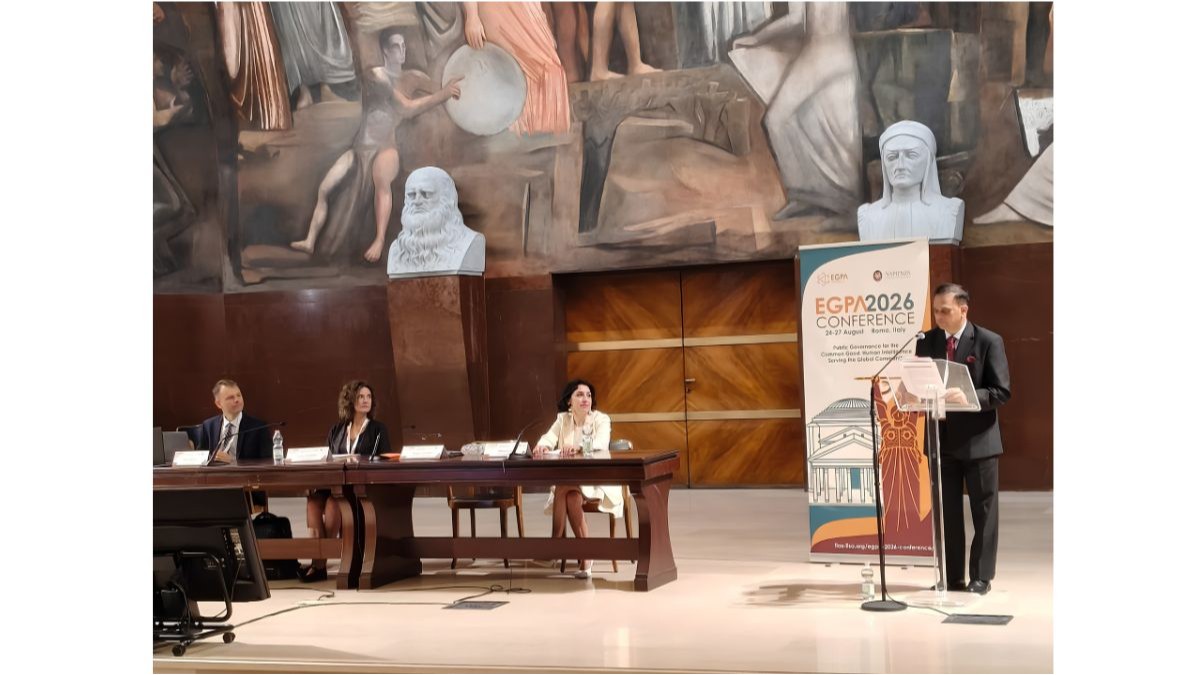
Rome: International Institute of Administrative Sciences (IIAS) President Voruganti Srinivas, IAS, called for transforming governance through technology, citizen-centric reforms and greater international collaboration while delivering the IIAS Presidential Address at the 51st EGPA Conference 2026 at Sapienza University, Rome.
Speaking on the theme “Public Governance for the Common Good – Human Intelligence Serving the Global Community,” Srinivas described the conference as a landmark event, with more than 900 submissions from over 70 countries. He said the growing global participation reflected the increasing importance of public administration in addressing contemporary challenges.
Srinivas highlighted the need for Next Generation Reforms and transforming governance to ensure seamless delivery of public services, particularly to citizens at the last mile. He emphasised the role of technology in bringing governments and citizens closer, improving grievance redressal and strengthening ease of living and ease of doing business.
He also highlighted India’s experience with digital governance, including Digital Public Infrastructure, UMANG, Aadhaar-based services, WhatsApp-based delivery models and the growing use of Artificial Intelligence in governance. Capacity building of public officials and continuous improvement in governance processes were identified as important elements of effective administration.
Looking ahead to the IIAS centenary in 2030, Srinivas outlined a vision of a digitally agile, publication-rich and resource-strong institution serving governments, academia, civil servants, researchers and practitioners. He stressed the importance of strengthening trust in governance, advancing administrative theory and leveraging public administration to support the Sustainable Development Goals.
Calling for “collaboration without borders, knowledge without boundaries and governance without exclusion,” Srinivas said the future of public administration would depend on stronger cross-national cooperation, digital transformation, sustainability and citizen-centric governance. He also underlined the importance of engaging younger scholars and practitioners and strengthening the bridge between research and practical governance.

Comments (0)
No comments yet. Be the first.